






By Alex Rivera December 04, 2025
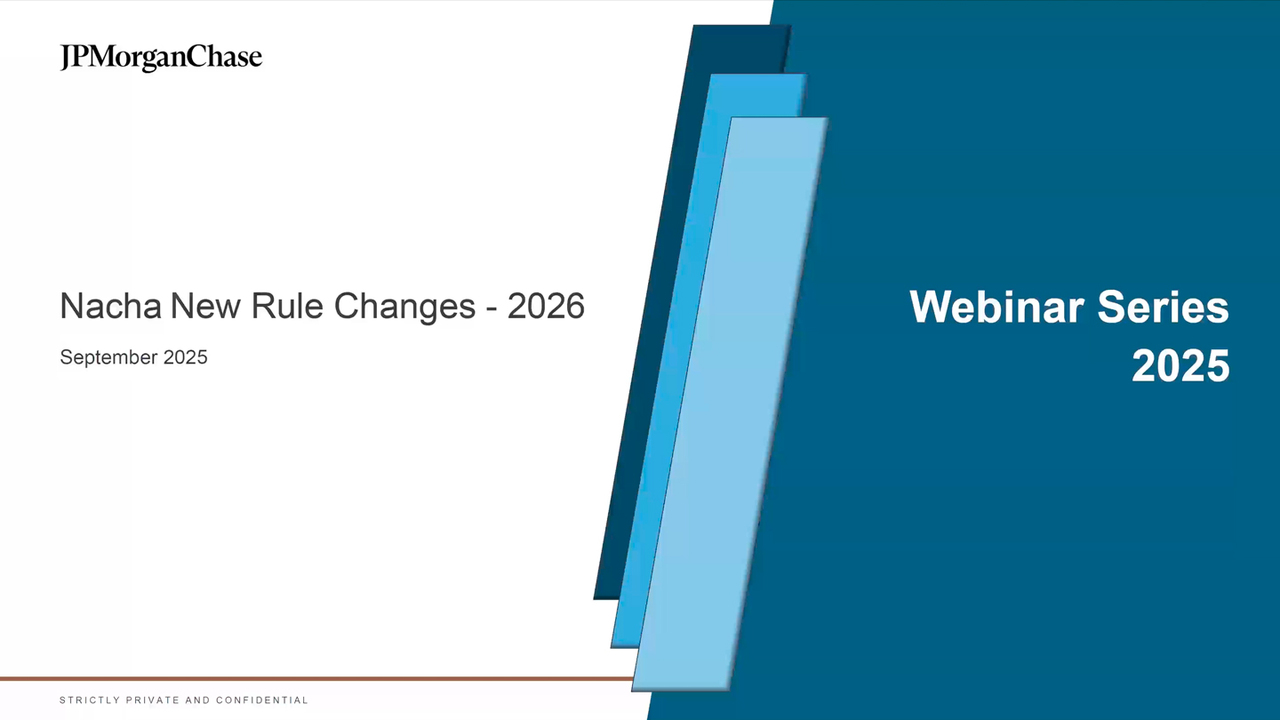
The financial world is witnessing a groundbreaking collaboration that bridges traditional banking with cutting-edge blockchain technology. JP Morgan, through its blockchain arm Kinexys, has teamed up with Nacha via its Phixius platform to enhance account validation for Automated Clearing House (ACH) payments. This partnership, highlighted in recent Ledger Insights reports, promises to streamline processes, boost security, and reduce fraud in the U.S. payment ecosystem. In this detailed exploration, we’ll dive into the specifics of this alliance, its implications for the fintech landscape, and why it matters for businesses, consumers, and the broader economy. As digital payments evolve, initiatives like this underscore the fusion of legacy systems with innovative tech, paving the way for faster, more reliable transactions. Whether you’re a fintech enthusiast, a business owner handling payments, or simply curious about blockchain’s real-world applications, this guide will break down the key elements and future potential of this development. By understanding these advancements, you can better navigate the shifting tides of financial technology.

Background on the Key Players: JP Morgan, Nacha, and Their Roles in Payments
To appreciate this partnership, it’s essential to understand the players involved. JP Morgan, one of the world’s largest banks, has been at the forefront of blockchain innovation through its Kinexys division (formerly Onyx). Kinexys focuses on building scalable blockchain solutions that transform how money, assets, and information move. Their Liink network, a permissioned blockchain platform, enables secure peer-to-peer data sharing among financial institutions, emphasizing sovereignty, security, and privacy.
On the other side, Nacha (National Automated Clearing House Association) governs the ACH Network, which processes over 30 billion payments annually in the U.S., valued at trillions of dollars. ACH handles everything from direct deposits to bill payments. Phixius by Nacha is a secure, peer-to-peer payment information network designed to facilitate the exchange of payment-related data, reducing errors and fraud in transactions.
Ledger Insights, a leading source for blockchain and enterprise tech news, reported on this collaboration, noting how it extends blockchain’s utility beyond cryptocurrencies into everyday banking operations. This isn’t JP Morgan’s first foray into blockchain— they’ve been experimenting with it since 2017—but partnering with Nacha marks a significant step in integrating it with established payment rails like ACH.
The partnership centers on Kinexys Liink’s Confirm application, which provides near real-time global validation of bank account ownership, status, and transactions. By collaborating with Phixius, this capability now extends to domestic U.S. accounts, creating a symbiotic relationship where both networks benefit from expanded data access.
Details of the Partnership: How It Works and What It Entails
Announced in April 2025, the collaboration establishes information exchanges between Phixius and Kinexys Liink. Phixius acts as Kinexys Liink’s primary U.S. payment information network Responder, allowing for near real-time validation of domestic bank account data. In return, Phixius participants gain access to Confirm’s global validation features, broadening their reach beyond U.S. borders.
Here’s how it operates:
- Account Validation Process: Before initiating an ACH payment, users can query the network to verify account details. Blockchain ensures tamper-proof records, reducing the risk of errors or fraudulent entries.
- Integration with ACH: ACH payments often face delays due to manual verifications or micro-deposits. This partnership enables automated, blockchain-backed checks, potentially cutting validation time from days to seconds.
- Security Features: Leveraging blockchain’s immutable ledger, the system maintains data privacy while allowing secure sharing. It’s payment rail-agnostic, meaning it works across various transaction types without favoring one over another.
- Global Expansion: For international payments, Confirm’s capabilities help mitigate cross-border friction, such as differing regulations or currency issues.
Rob Unger, Managing Director of ACH Network Development at Nacha, emphasized the collaborative aspect: “Phixius’ collaboration with Kinexys Liink offers a unique opportunity to facilitate collaboration across respective networks. Kinexys Liink and Phixius customers can benefit by validation services using data provided by either network, helping to mitigate payment fraud and reduce potential ACH returns.”
Gloria Wan, General Manager of Kinexys Liink at Kinexys by J.P. Morgan, added: “We are committed to enhancing the provision of secure, efficient data connectivity to address industry challenges and innovation opportunities. Through the collaboration with Phixius by Nacha, we look forward to expanding the reach of Kinexys Liink to further strengthen account validation and cross-border payment infrastructure globally.”
This setup not only enhances domestic ACH efficiency but also positions blockchain as a core tool for global finance.
Benefits of the JP Morgan-Nacha Collaboration
The advantages span security, efficiency, and cost savings, making this a win for all stakeholders.
- Fraud Mitigation: Payment fraud costs U.S. businesses billions annually. Real-time validation reduces risks like account takeover or invalid transfers. Blockchain’s transparency ensures data integrity, making it harder for bad actors to manipulate information.
- Operational Efficiency: Traditional validations via micro-deposits take 2-3 days. Near real-time checks speed up onboarding, payroll, and bill payments, improving cash flow for businesses.
- Cost Reduction: Fewer returns mean lower fees. ACH returns cost originators around $0.50-$5 per instance; minimizing these adds up significantly.
- Global Reach for U.S. Users: Phixius users now access international validation, aiding SMBs in global trade.
- Innovation in Fintech: This bridges traditional finance (ACH) with blockchain, encouraging more hybrids. It could inspire similar integrations in other networks.
For consumers, this means faster, safer transactions—think seamless direct deposits or instant bill pays without verification hassles.
Implications for ACH, Blockchain, and the Broader Financial Ecosystem
This partnership signals a maturing fintech landscape where blockchain moves from experimental to essential.
For ACH: It modernizes a 50-year-old system, making it competitive with faster alternatives like RTP (Real-Time Payments). Nacha has been pushing for same-day ACH; blockchain validation accelerates this.
For Blockchain: Adoption by giants like JP Morgan validates its utility beyond crypto. Kinexys Liink, with over 100 members, shows enterprise blockchain’s scalability.
Broader Implications:
- Regulatory Alignment: Complies with U.S. regs like Reg E, potentially easing blockchain adoption.
- Cross-Border Payments: Addresses SWIFT’s inefficiencies, aligning with global trends like ISO 20022.
- Fraud Prevention Trends: With rising cyber threats, this sets a standard for proactive validation.
- Economic Impact: Faster payments boost liquidity, aiding economic recovery post-inflation.
Ledger Insights notes this as part of a trend where banks leverage blockchain for non-crypto uses, like supply chain or trade finance.
Challenges and Considerations in Implementation
No innovation is without hurdles:
- Adoption Barriers: Financial institutions must integrate new APIs, requiring IT upgrades.
- Privacy Concerns: While blockchain ensures security, data sharing needs robust consent mechanisms.
- Scalability: Handling ACH’s volume (30B+ transactions/year) demands high-performance blockchain.
- Regulatory Scrutiny: U.S. regulators like the Fed will monitor for compliance.
- Competition: Rivals like Visa or Ripple offer similar solutions; differentiation is key.
Addressing these, JP Morgan and Nacha emphasize phased rollouts and pilot testing.
Future Outlook: What This Means for Fintech and Beyond
Looking ahead, this could expand to other validations, like identity or KYC. As blockchain matures, expect more integrations—perhaps with CBDCs or DeFi.
For businesses: Adopt early for competitive edges in payments.
For consumers: Smoother experiences, less fraud worry.
In 2025, with digital economy growth, such partnerships are crucial. Ledger Insights predicts more bank-fintech collabs, accelerating innovation.
How This Fits into AdSense-Ready Content Strategies
For website owners aiming for Google AdSense approval, covering timely fintech topics like this demonstrates originality and value. Detailed, research-backed posts attract traffic, aligning with Google’s quality focus. Include sources, visuals, and CTAs to engage readers.
In conclusion, the JP Morgan-Nacha partnership via Kinexys and Phixius is a milestone in blending ACH with blockchain. It enhances validation, reduces risks, and sets the stage for future finance. Stay tuned for updates—what do you think this means for your payments? Share below!